
The Spaghetti Web Is Eating Your IT Budget: Here’s the Way Out
Every new retailer mandate adds another fragile point-to-point link to your estate. Here’s how to spot when integration sprawl is quietly draining your budget, and the architectural change that stops it for good.
By Paul Butler Simpson & Aniello Sabatino · Transalis
TL;DR
- Point-to-point EDI is bespoke by nature. Every trading partner is a separate build with its own formats, rules and protocols, so the work multiplies instead of adding up.
- The expensive part is never the initial build. It is perpetual maintenance, in-house specialist time, and per-transaction pricing that charges you more as you grow.
- The architectural fix is to stop adding connections. You integrate your ERP once to a network, and reach every partner already on it.
- From that single point of access, Transalis already reaches 15,000+ connections and trading partners, so adding a partner is usually enablement rather than construction.
- Unwinding the web is not a big-bang rebuild. Map what you have, connect once, then migrate partners across and retire the bespoke links as you go.
There’s a moment every IT team hits with EDI. The first retailer connection is fine. So is the second. By the twentieth, something has quietly changed: your team is no longer building integrations, they’re nursing them. A retailer tweaks a validation rule, a dispatch note stops registering, and a senior engineer loses a day to it. Multiply that across every trading partner you have ever connected, and you have the single most underestimated line in an IT budget.
We call it the spaghetti web, and the good news is that it is an architectural choice, not a law of nature. This guide covers how to recognise it, where the money actually goes, and how to unwind it.
Why do point-to-point EDI connections become unmanageable?
Because every point-to-point connection is bespoke. Each trading partner has its own formats, validation rules, transmission protocols and schedules, so each link is a small, separate piece of engineering that has to be built, tested, and then maintained for as long as it lives.
One or two of these are trivial. The problem is that the work doesn’t simply add up; it multiplies. Twenty partners is not twenty tidy lines, it is twenty independent things that can break, each on someone else’s release schedule. When a hub changes a spec at their end, the failure surfaces at yours, usually at the worst possible moment. The tell-tale signs are easy to spot once you know them:
- Every new retailer is treated as a project, with its own timeline and its own risk.
- A standing maintenance backlog that never quite clears, because partners keep changing their requirements.
- Your most capable engineers are tied up keeping existing links alive rather than building anything new.
- Chargebacks or rejected deliveries that trace back to a mapping or scheduling change you didn’t catch in time.
Where the budget actually goes
The expensive part of EDI is almost never the initial build. It is the perpetual upkeep: the maintenance loop, the specialist time, and pricing models that charge you more precisely as you succeed.
Three costs hide inside a sprawling trading partner network. The first is maintenance: keeping dozens of bespoke links current as partners revise their specifications. The second is people: the in-house EDI specialists whose week disappears into drudgery instead of strategic work, and who are painful to replace when they move on. The third is the pricing model itself. Legacy VAN providers that charge per transaction, per message or per kilo-character turn growth into a penalty, because the more you trade, the more you pay, regardless of the value you are getting back. Scaling a healthy business should never read like a fine.
How to scale EDI without adding connections
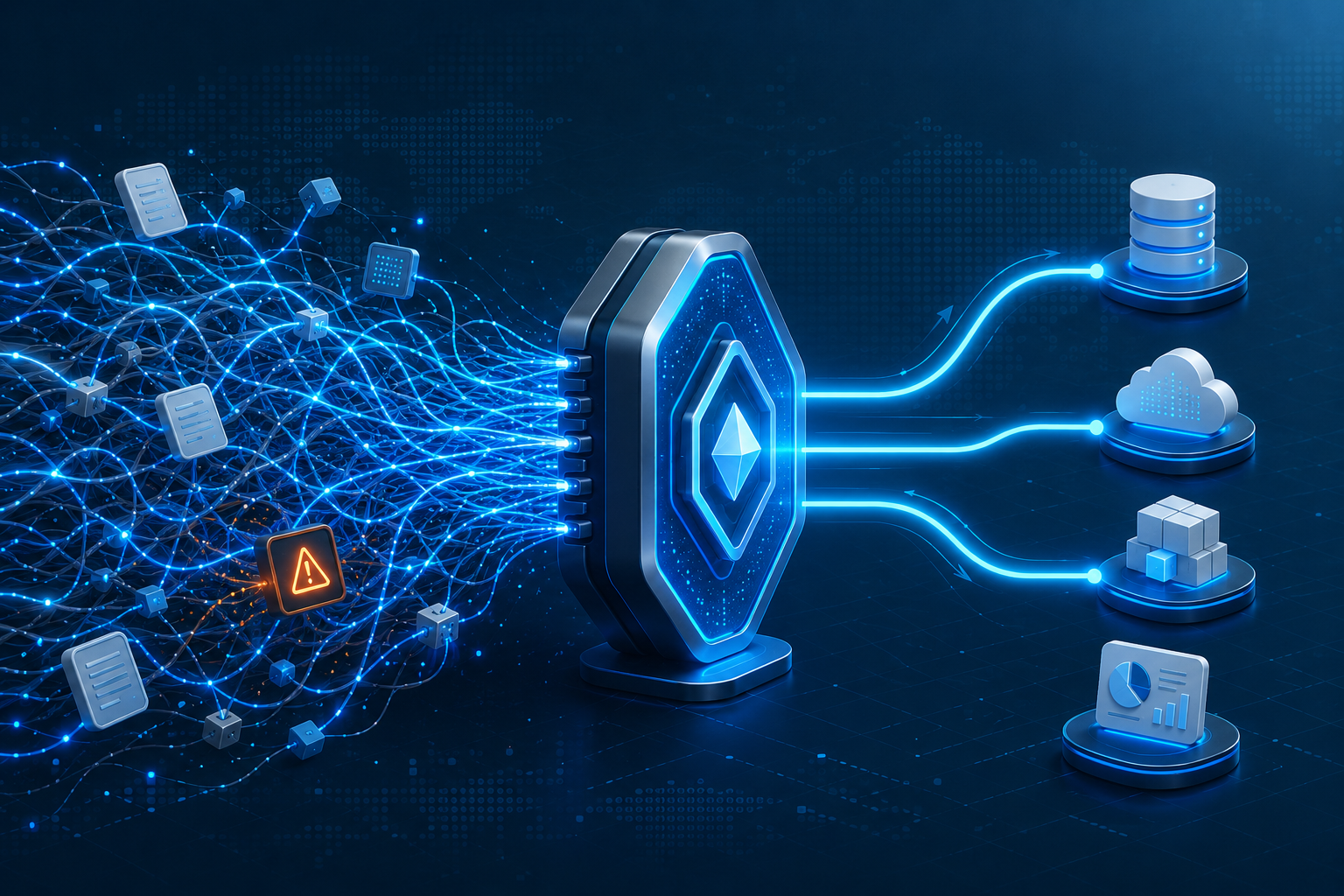
You stop adding connections altogether. Instead of a new bespoke link for every partner, you make one managed connection to a network and reach every partner already on it. The web collapses into a single line, and the maintenance burden moves off your team entirely.
This is the architectural fix at the heart of the Transalis Business Network. You integrate your ERP to us once. We take ownership of the formats, the protocols and the constantly shifting message standards. That is what a managed outcome means: your team never touches an EDIFACT file or chases an AS2 change again. From that single point of access you can already reach 15,000+ connections and trading partners, which is why adding a new one is usually enablement rather than construction. And because we don’t charge a success penalty, trading more doesn’t inflate your bill; a predictable, fixed-cost model means the cost curve finally flattens while your volume grows.
The same connection does more than move documents. With Transalis OpenEDI™ as the foundation and Transalis DataTrack™, the data stops disappearing into an archive and becomes total transaction visibility, so you can see what was sent, received and processed in real time rather than discovering a problem when a truck is turned away.
How to unwind the web, step by step
If you are carrying integration sprawl today, the move doesn’t have to be a big-bang rebuild. A sensible sequence:
- Map what you’ve got. List every active trading-partner connection, the format it uses, and who maintains it. The size of that list is usually the business case on its own.
- Check who’s already on the network. A large share of your partners are likely reachable the moment you connect, so they cost you nothing new to onboard.
- Integrate the ERP once. Make a single connection into your existing system, whether that is NetSuite, SAP, Microsoft Dynamics or otherwise, and let the managed layer handle the translation behind it.
- Migrate partners as enablement, not projects. Switch existing links over to the network and retire the bespoke code as you go, rather than maintaining two worlds forever.
- Turn on visibility. Use DataTrack to monitor transactions live, so exceptions surface before they become chargebacks.
What a real fix should give you
If you are weighing up options, hold each one against this short checklist. A genuine architectural fix delivers all five:
- A single point of access, not another link to maintain.
- Managed outcomes: the provider owns the formats, protocols and standards, so you don’t need in-house EDI specialists.
- Network reach, so your target partners are likely already connected.
- Predictable, fixed-cost pricing, never a success penalty that grows with your volume.
- Live data visibility, so transactions are something you can see and act on, not just send.
The way out
The spaghetti web feels permanent because it grew one reasonable decision at a time. But every strand you maintain is a strand you chose, and the same is true of the alternative. Collapse the web into a single managed connection and your IT budget stops funding maintenance and starts funding growth. Your team gets its time back, your network gets simpler as you scale, and the next retailer mandate becomes a switch you flip rather than a project you dread.
Frequently asked questions
Do I have to rip out my existing EDI to do this?
No. There is no big-bang rebuild. You make one managed connection, then migrate trading partners across as enablement and retire the bespoke links as you go. Transalis OpenEDI™ keeps your proven EDI foundation intact while the managed layer modernises how it connects to ERPs and marketplaces.
How long does moving off point-to-point connections take?
It depends on the size of your network, but the shift is that onboarding becomes enablement rather than construction. Partners already on the network can often be switched on in hours or days, and the migration runs in the background rather than as a single disruptive cutover.
Will it work with NetSuite, SAP or Microsoft Dynamics?
Yes. You integrate your existing ERP once, whether that is NetSuite, SAP, Microsoft Dynamics or another system, and Transalis takes ownership of the data translation behind it. You don’t re-platform or change your ERP; the single connection sits alongside it and absorbs the format and protocol complexity.
Do I still need my in-house EDI team?
Not for the maintenance grind. As a managed outcome, Transalis owns the formats, protocols and shifting message standards, so your specialists are freed from the constant upkeep loop. Most teams redirect that time from keeping fragile links alive to higher-value work rather than losing headcount.
How is the pricing different from per-transaction models?
Transalis uses a predictable, fixed-cost model rather than charging per transaction, per message or per kilo-character. Legacy pricing turns growth into a success penalty, where trading more means paying more. A flat, predictable cost means your bill doesn’t spike as your volume and partner count grow.
Map your supply chain with us
See how much of your current network could collapse into a single connection.
Map your supply chain