


Related Posts






Categories
Situation: We have all worked in organisations where systems aren’t connected… it costs time, effort, money and is hugely frustrating! Is there a way out of this tangled mess?
Most growing businesses are no longer operating through a single sales channel. They are selling direct to consumer through their own ecommerce platforms, trading through major marketplaces such as Amazon and eBay, and expanding into high street retail across multiple regions.
This shift to omnichannel has created opportunity, but it has also introduced complexity. Each channel brings its own requirements. Marketplaces demand strict SLAs and rapid acknowledgements. Sellers whether you are a retailer or manufacturer require EDI-compliant documents. Logistics partners need accurate, real-time data. Internally, ERP and accounting systems must remain aligned with everything happening externally.
The problem is that many organisations have not evolved their systems in line with this complexity. Instead, they have built up layers of disconnected tools, manual workarounds, and one-off integrations. As highlighted in the Transalis report Frictionless Business for the Future, scaling across multiple channels using manual processes is simply not sustainable. Businesses are left juggling spreadsheets, rekeying orders, chasing updates, and constantly fixing errors. What started as growth quickly becomes operational strain.
Want to connect your ERP, Marketplaces and Logistics seamlessly?
Book a free 30-min consultation with one of our expert advisors on connectivity.

Implications: Why Sellers Need a Single Integration Layer
Automation is often positioned as a way to reduce costs. And it does. Labour is reduced, errors decrease, and processes become faster. But focusing only on cost misses the bigger picture. The real challenge is not just efficiency. It is connectivity. Without a connected supply chain, growth creates friction:
New marketplaces mean new processes
New retail partners mean new compliance requirement
New regions mean new systems and formats
Many organisations respond by building more integrations, more patches, and more workarounds. Over time, this creates a fragmented architecture where every connection behaves differently, requires maintenance, and introduces risk. What businesses actually need is not more connections, but a single integration layer. A centralised approach that can take in data from multiple sources, standardise it, and distribute it cleanly across ERP systems, accounting platforms, warehouses, and logistics providers. This is what supply chain connectivity looks like in practice. It is not just about moving data faster. It is about creating a system where every part of the business is aligned, and information flows without friction. And that is where the real growth opportunity sits.
Outcomes: How will a Connected Supply Chain Make My Life Easier?
When businesses move to a connected model, the impact is immediate and measurable.
The Transalis report outlines how automation and integration enable a consistent, reliable flow of business-critical information across the organisation. In practical terms, this means:
Direct-to-consumer orders can be automatically routed to both warehouse and 3PL partners at the same time, ensuring fulfilment begins instantly.
Marketplace orders are acknowledged automatically, reducing the risk of penalties or fines caused by missed SLAs.
Retail orders are formatted correctly and remain compliant with EDI message standards, removing the need for manual intervention.
Invoices are captured and imported directly into accounting systems, eliminating reconciliation delays and reducing finance overhead.
These are not isolated improvements. They are part of a wider shift towards a supply chain that operates as one connected system. The result is not just lower cost, but the ability to scale operations without adding complexity or headcount.

Resolution: How Transalis Connects ERP, Marketplaces and Logistics: A Real-World Example
A clear example of this comes from a Transalis customer featured in the report. The business is a manufacturer of an early learning audio player. It already had a strong direct-to-consumer model, selling through its own ecommerce platform as well as marketplaces such as Amazon and eBay. As demand increased and new retail channels opened across Europe and the United States, the limitations of its existing processes became clear. Manual handling of orders, invoices, and fulfilment workflows could not keep up with growth. Each new channel added more pressure, more admin, and more risk. The business needed a different approach. Working with Transalis, the company implemented automated EDI processes and introduced a single integration layer that connected all of its systems. This integration layer acted as a central hub.
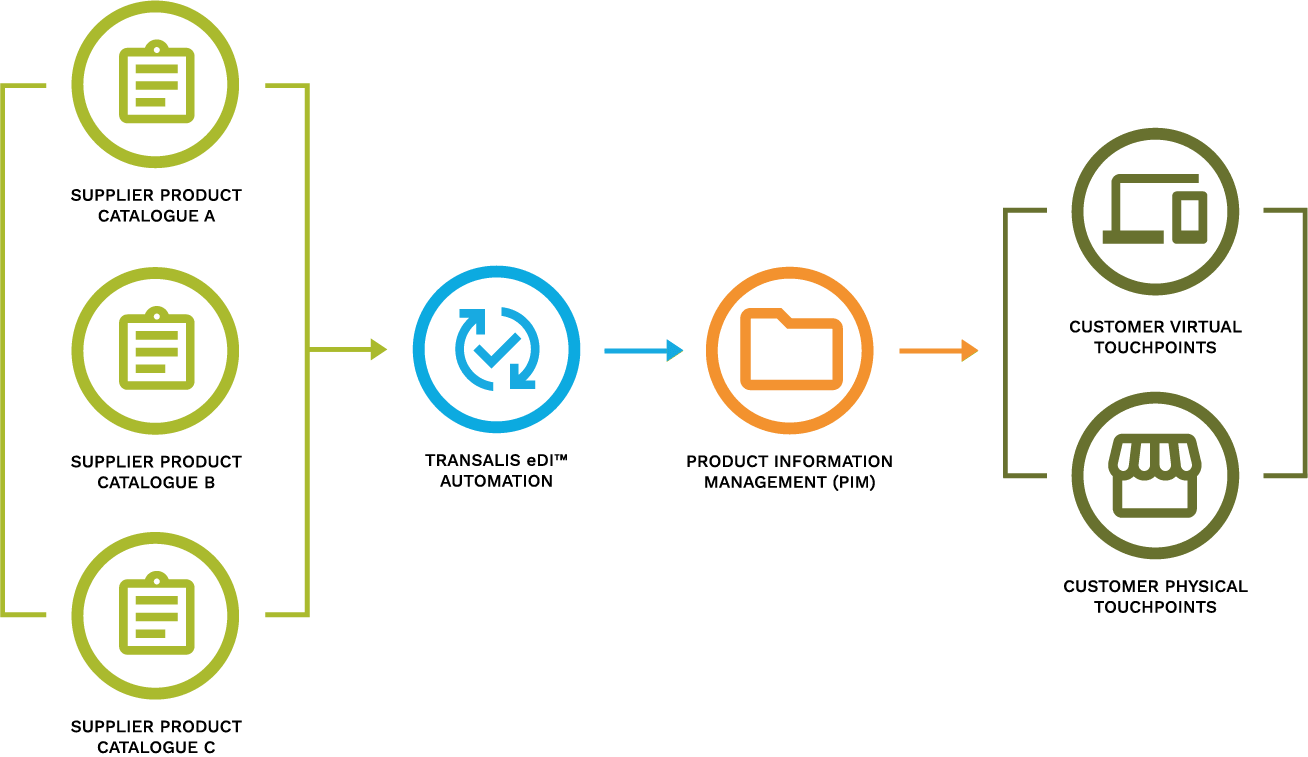
Orders, invoices, ASNs, and other business documents flowed through this layer, where they were standardised and automatically routed to the correct destination. Whether that was the ERP system, a marketplace, a retailer, or a logistics partner, the process required no manual intervention. As illustrated in the process flow diagram in the report, this approach connected ERP and accounting systems with direct-to-consumer channels, marketplaces, high street retail, and 3PL providers into one unified system. The impact was significant. The business was able to scale without hiring additional staff to manage manual processing. Automated workflows replaced repetitive tasks, while ensuring consistency and compliance across every trading partner.
The outcome was not just operational efficiency, but measurable financial return, with the solution delivering a minimum saving of £200,000 annually.
The Bigger Picture: Unifying ERP, Marketplaces and Logistics into One Connected Supply Chain
Many organisations today are still operating with a patchwork of integrations. Each system connects to another in isolation, creating a web of dependencies that is difficult to manage and even harder to scale. The Transalis approach is different. Instead of building multiple point-to-point connections, it introduces a middleware layer that sits between systems. This layer standardises data, manages message formats, and ensures that information flows cleanly between all parties.
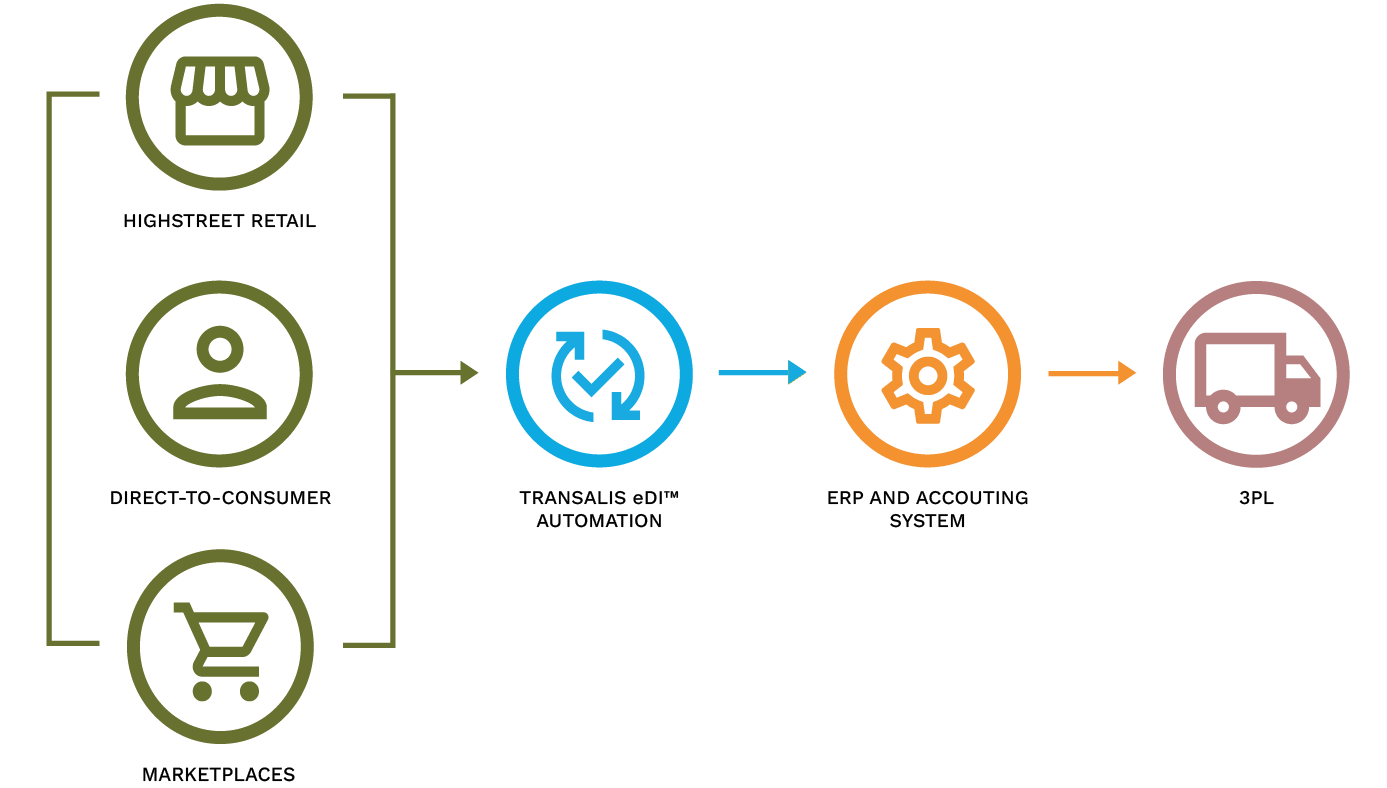
It can connect marketplaces, ERP systems like Microsoft Dynamics, accounting platforms, warehouses, and third-party logistics providers within a single framework. This is what enables a truly connected supply chain. It removes the quirks, inconsistencies, and maintenance burden that come with fragmented integrations, and replaces them with a structured, scalable approach.
How to Unify ERP, Marketplaces and Logistics into One Connected Supply Chain
The challenge for businesses is no longer just about reducing costs. It is about building a supply chain that can support growth without introducing complexity. A connected supply chain allows organisations to bring together direct-to-consumer, marketplace, and retail operations into one unified system. It ensures that data flows seamlessly, processes run automatically, and every part of the business operates from the same source of truth. For organisations looking to scale across channels, regions, and partners, this is no longer optional. It is the foundation for sustainable growth. And with Transalis, it is already being delivered, get in touch to see how we can help you untangle your systems.
Download the Frictionaless Business Report
Discover 3 key areas where businesses can leverage the benefits of automation in our latest report.
eDI Software

eDI Instant
Ideal for businesses that have an EDI mandate from their trading partner and need to get connected as soon as possible

eDI Essential
Ideal for companies that are starting to build out their trading networks and enhance their EDI experience with up to 2 connections

eDI Freedom
Ideal for companies who are looking for a base of 3 trading partners with the flexibility to build their own uniquely configured trading network
Web Connect
Ideal for organisations with large trading networks that require a self-managed solution via web connectivity

Enterprise Connect
Ideal for organisations with large trading networks requiring integrated connectivity to internal business systems
To discuss your need for Marketplace integration, call us on 0845 123 3746 (UK) or +44 1978 369 343 (international), or email sales@transalis.com. Want to learn more about EDI and Transalis solutions? Visit our Knowledge Hub, which includes client case studies, beginners’ guides, and quarterly whitepapers.